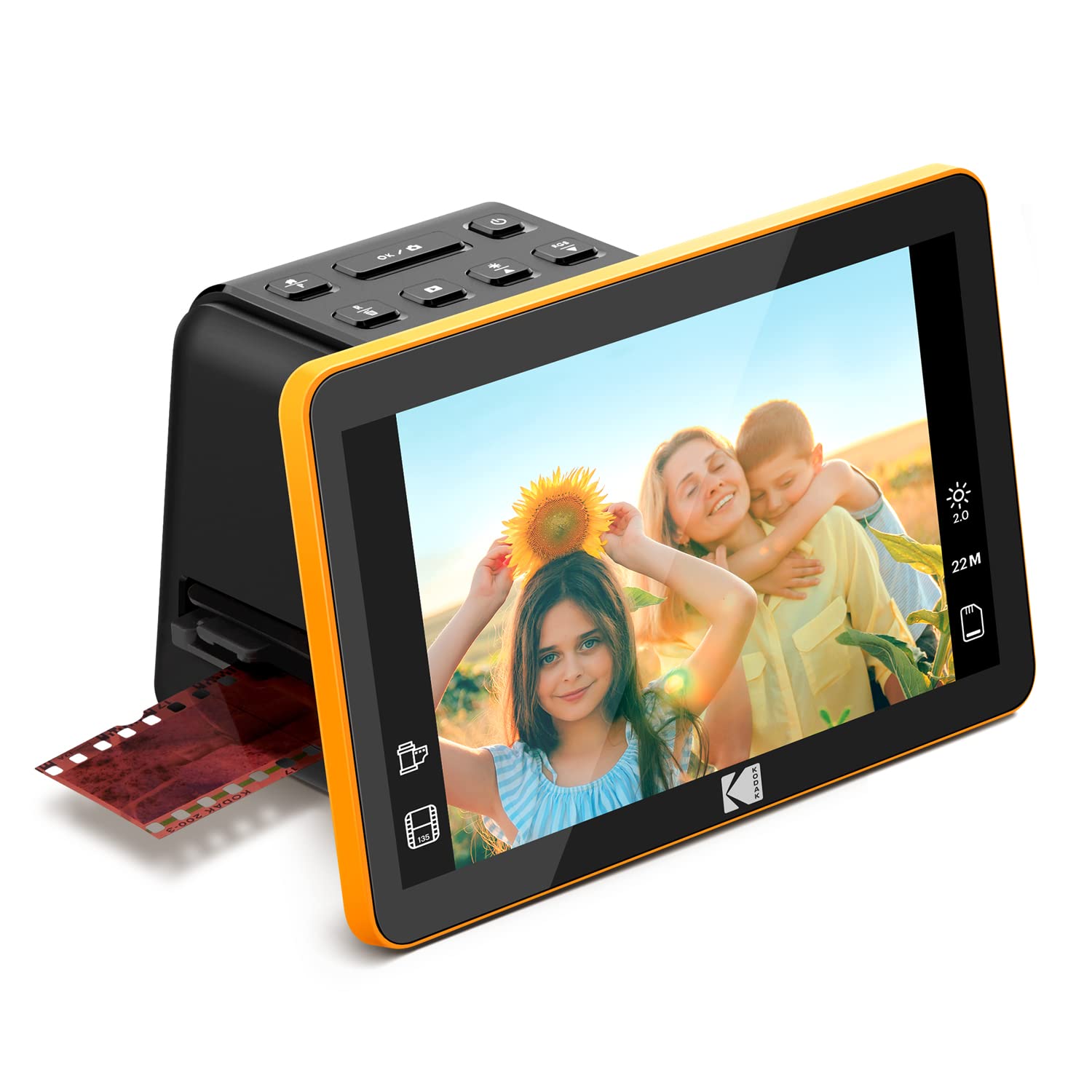
The KODAK Slide N Scan Max is built to make home film archiving more approachable, combining a moving film tray, simple image adjustments, and direct SD card saving.
This kodak slide n scan max review looks at how that design suits people who want to convert familiar negatives and slides without building a computer-centered workflow.
Slide N Scan Max Review Summary
The quick verdict
1,000+ ratings
Read Amazon ReviewsKODAK Slide N Scan Max
A practical fit for families digitizing common 35mm, 110, and 126 film who want direct SD card saving and an onboard screen.
- Supports 135mm, 110mm, and 126mm film formats, including slides and color or black-and-white negatives.
- Uses a smooth-moving tray designed to feed film with less need for constant repositioning.
- Saves directly to SD or SDHC cards with capacities up to 32GB.
- Offers one-touch image resizing, conversion, and adjustment through its capture software.

Pros
- Covers three common film sizes and both slides and negatives.
- Direct card saving can keep a basic digitizing session independent of a computer.
Consider before buying
- SD/SDHC support is limited to cards up to 32GB, so a large scanning project may need periodic file transfers.
- The output figure includes interpolation; buyers who prioritize captured detail should judge sample scans and workflow needs before relying on the larger output number.
Read the full review summary
The Slide N Scan Max pairs broad format support with a straightforward capture process.
It accepts 135mm, 110mm, and 126mm film, including color and black-and-white negatives as well as slides, and saves files to an SD or SDHC card up to 32GB.
A moving tray is intended to feed film without repeated repositioning, while one-touch editing offers basic resizing, conversion, and image adjustments.
Its 13MP CMOS sensor produces output up to 4208 × 3120, with 22MP interpolation. That combination is aimed at convenient digital copies rather than a highly configurable scanning setup.
It makes most sense for someone organizing a mixed collection of supported family film and looking for a relatively self-contained process; buyers with unusual formats or a need for fine-grained image control should check the workflow carefully before choosing.
The buying factors
Slide N Scan Max Scorecard
Editorial scores reflect listed features and buyer fit; they are not laboratory measurements or customer ratings.
Supported film formats
Handles 135mm, 110mm, and 126mm film in both slide and negative forms.
Standalone workflow
Direct SD/SDHC saving up to 32GB supports scanning without a computer in the workflow.
Ease of operation
A moving tray and one-touch editing are designed to reduce repeated handling and menu work.
Image output potential
The 13MP CMOS sensor and interpolated output up to 22MP provide useful resolution options, though interpolation is not the same as added captured detail.
Editing flexibility
The described tools cover resizing, conversion, and adjustments, but do not establish extensive manual controls.
Archive capacity fit
A supported card ceiling of 32GB may be adequate for a project, but larger archives could require regular offloading.
Key Features and Specifications of Slide N Scan Max
- Supports 135mm, 110mm, and 126mm film formats, including slides and color or black-and-white negatives.
- Uses a smooth-moving tray designed to feed film with less need for constant repositioning.
- Saves directly to SD or SDHC cards with capacities up to 32GB.
- Offers one-touch image resizing, conversion, and adjustment through its capture software.
- Uses a 13MP CMOS sensor and provides image output up to 4208 × 3120, with 22MP interpolation.
- Compact unit measures 6.69 × 5.35 × 4.45 inches and weighs 16 ounces.
- Includes a one-year limited warranty; the listed minimum system requirement is Windows 7.
Pros and Cons of Slide N Scan Max
Pros
- Covers three common film sizes and both slides and negatives.
- Direct card saving can keep a basic digitizing session independent of a computer.
- The moving tray is intended to make feeding a batch of film less fiddly.
- Simple editing options keep routine adjustments accessible.
Consider before buying
- SD/SDHC support is limited to cards up to 32GB, so a large scanning project may need periodic file transfers.
- The output figure includes interpolation; buyers who prioritize captured detail should judge sample scans and workflow needs before relying on the larger output number.
- The specified format list is limited to 135mm, 110mm, and 126mm, so check whether every part of your collection fits those formats.
Who Should Buy Slide N Scan Max?
Good fit
Consider it if you have a box of common family slides or negatives and want to make digital copies in manageable batches.
Supporting both color and black-and-white negatives as well as slides gives it a useful range for a typical mixed archive, and direct card saving avoids making a computer the center of every scan session.
The design may also suit occasional users who value a simple routine over detailed manual processing.
A moving tray and one-touch adjustment approach can help keep the process approachable when the aim is to preserve and share images rather than perform extensive restoration.
Before buying, identify the formats in your collection and estimate how you will store scans.
Confirm that your films are among the supported sizes and decide whether a card capacity of up to 32GB works for your project or whether you are comfortable transferring files as you go.
Who should skip it
Look elsewhere if your collection includes formats beyond 135mm, 110mm, and 126mm, or if support for those other formats is essential to your project. The listed coverage should guide the decision.
It may be a poor fit if you need extensive image processing controls or expect an interpolated 22MP output to provide the same detail as a native high-resolution capture. Consider your desired output and editing workflow before committing.
KODAK Slide N Scan Max: What Its Design Means for Home Scanning
A practical format range
Support for 135mm, 110mm, and 126mm covers several familiar film types, with both slides and color or monochrome negatives included.
That breadth is helpful when one household archive spans different cameras, but the format names still matter: sort or identify the collection first so unsupported material does not interrupt the project.
A scanning workflow with fewer handoffs
The smooth-moving tray is designed to feed film without constant repositioning, and direct SD/SDHC saving means files can be captured without a computer as part of the basic workflow.
This can make a home project easier to organize, especially if scanning a few strips or slides at a time.
A card ceiling of 32GB means buyers tackling a substantial archive should plan where files will go once a card fills.
Resolution and image adjustments
The scanner combines a 13MP CMOS sensor with output up to 4208 × 3120 and 22MP interpolation. Interpolation increases the output dimensions, but does not by itself establish additional optical detail.
One-touch resizing, conversion, and adjustments sound useful for preparing convenient copies; buyers seeking precise restoration should consider how much control they need beyond those described tools.
Size and setup considerations
At 6.69 × 5.35 × 4.45 inches and 16 ounces, the unit is small enough to store between archiving sessions. Its listed minimum system requirement is Windows 7, but direct card saving may cover a computer-free capture workflow.
If computer use is part of your plan, check that your current setup works with the scanner before starting a large batch.
Alternatives to Slide N Scan Max
Slide & Negative Scanners alternative
12,000+ ratings
Read Amazon ReviewsKODAK Slide N Scan Film & Slide Scanner
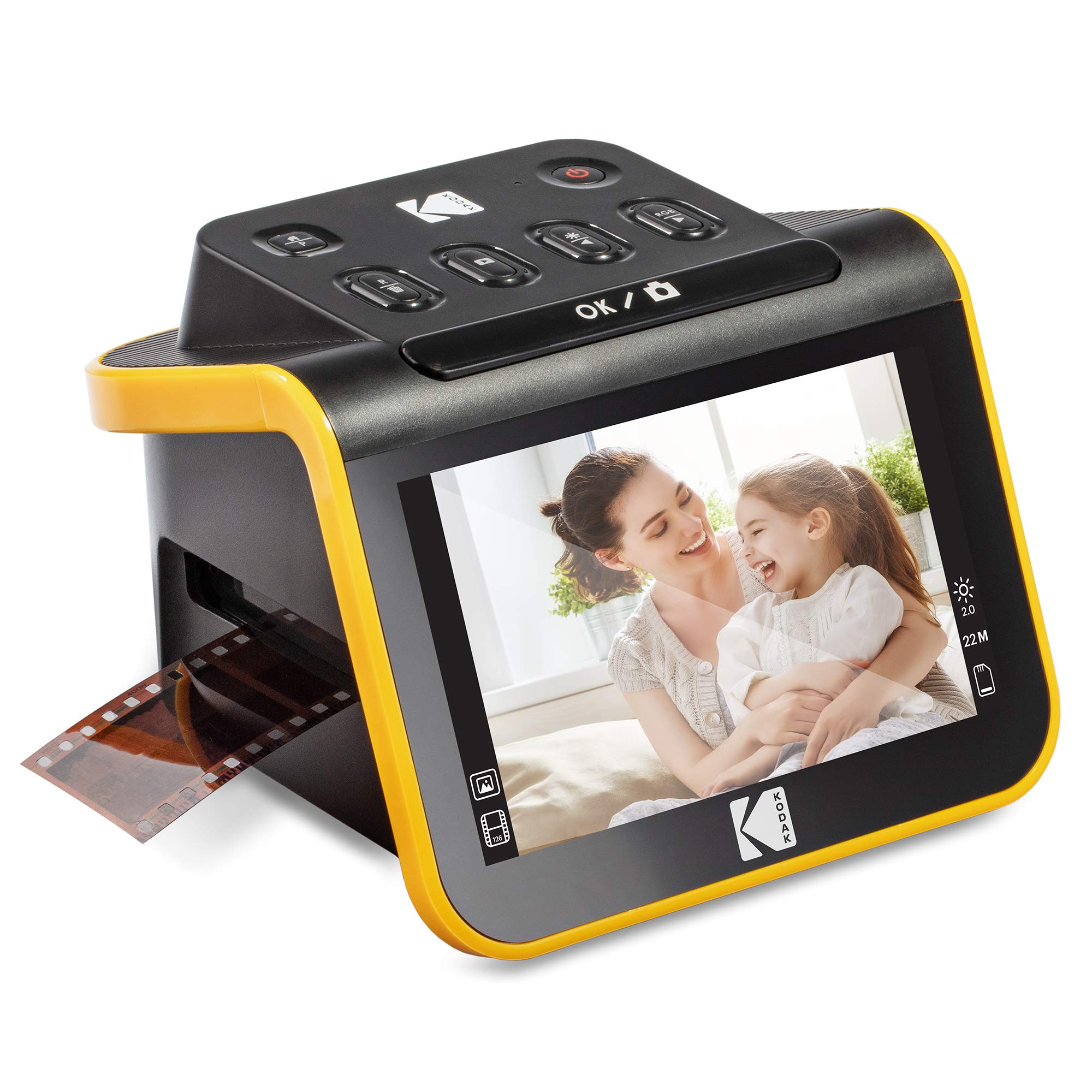
Choose the Max if its described tray and one-touch editing approach match your priority. Consider the other Slide N Scan if a built-in 5-inch screen and gallery viewing are more important for previewing or sharing scans.
- This Slide N Scan model covers 135, 110, and 126mm negatives and slides, and adds a 5-inch LCD with gallery mode.
- It supports SD/SDHC cards up to 32GB and includes film adapters and cleaning accessories.
- The Slide N Scan Max supports 135mm, 110mm, and 126mm film, saves to SD/SDHC cards up to 32GB, and has a 13MP sensor with interpolated output up to 22MP.
Slide & Negative Scanners alternative
11,000+ ratings
Read Amazon ReviewsKODAK SCANZA Film & Slide Scanner
The Max is a reasonable match for archives centered on its three supported film sizes and a card-based workflow.
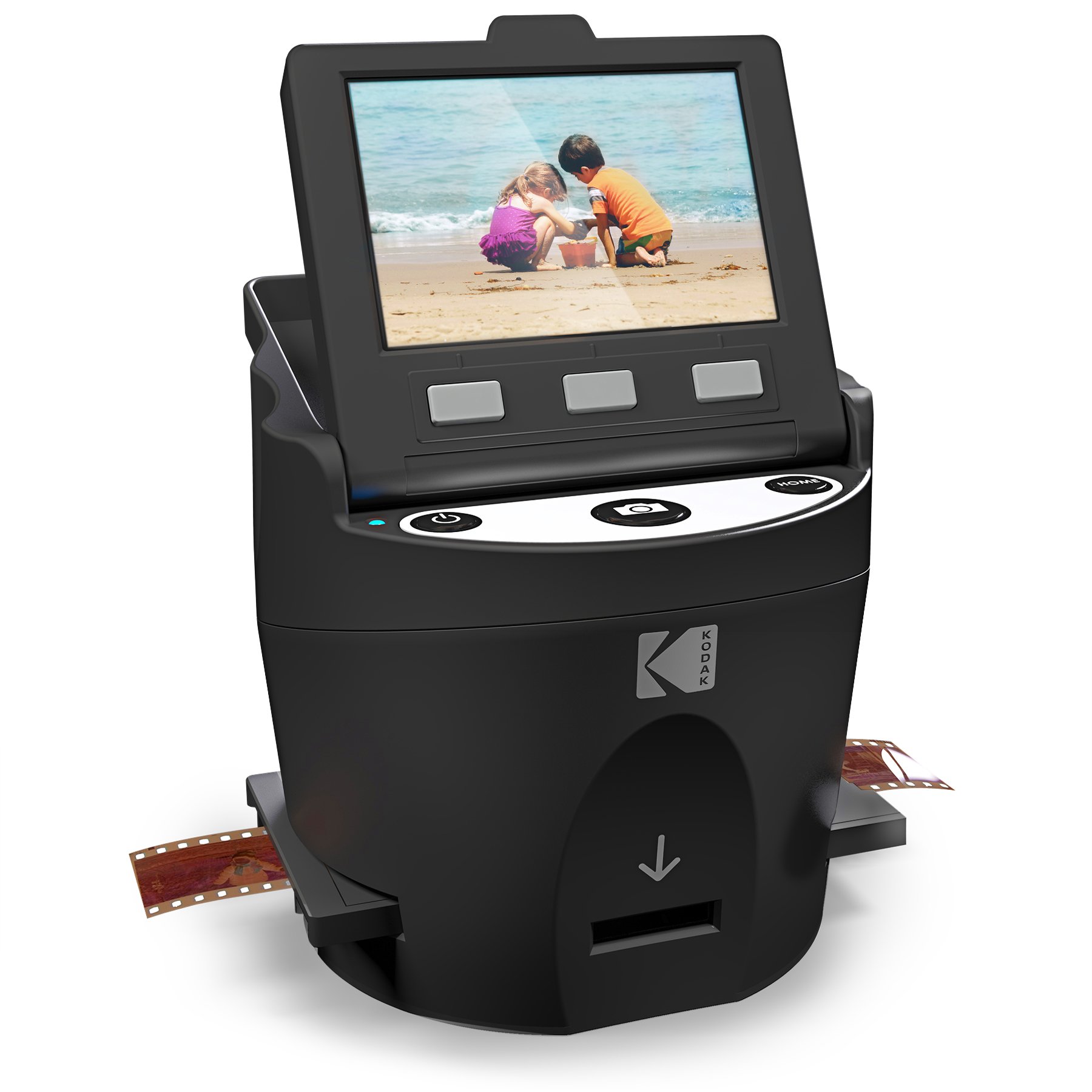
SCANZA is worth comparing if Super 8 or 8mm coverage, a tilt-adjustable screen, or the larger stated card capacity better fits your collection.
- SCANZA supports 35mm, 126, 110, Super 8, and 8mm film, has a 3.5-inch adjustable-brightness LCD, and supports SD cards up to 128GB.
- The Slide N Scan Max supports 135mm, 110mm, and 126mm film and saves directly to SD/SDHC cards up to 32GB.
Is Slide N Scan Max Worth It?
The KODAK Slide N Scan Max is worth considering for straightforward home digitizing of supported slides and negatives.
Its format coverage, moving tray, simple edits, and direct SD saving make a coherent package for preserving a family archive in batches.
Buy if the listed film sizes match your collection and 32GB card support is workable for your scanning plan.
Be more cautious if you need other film formats or extensive control over image processing; its interpolated output figure should also be weighed against your expectations for captured detail.
Your review at a glance
1,000+ ratings
Read Amazon ReviewsKODAK Slide N Scan Max
A practical fit for families digitizing common 35mm, 110, and 126 film who want direct SD card saving and an onboard screen.
- Supports 135mm, 110mm, and 126mm film formats, including slides and color or black-and-white negatives.
- Uses a smooth-moving tray designed to feed film with less need for constant repositioning.
- Saves directly to SD or SDHC cards with capacities up to 32GB.
- Offers one-touch image resizing, conversion, and adjustment through its capture software.