The BLUETTI AC180 pairs a 1,152Wh LiFePO₄ battery with 1,800W of AC output, making it a substantial portable power option for trips and essential backup.
This bluetti solar generator ac180 review looks at where its fast charging, solar input and UPS function fit—and where its capacity and output may be more than a light-duty user needs.
BLUETTI AC180 Review Summary
The quick verdict
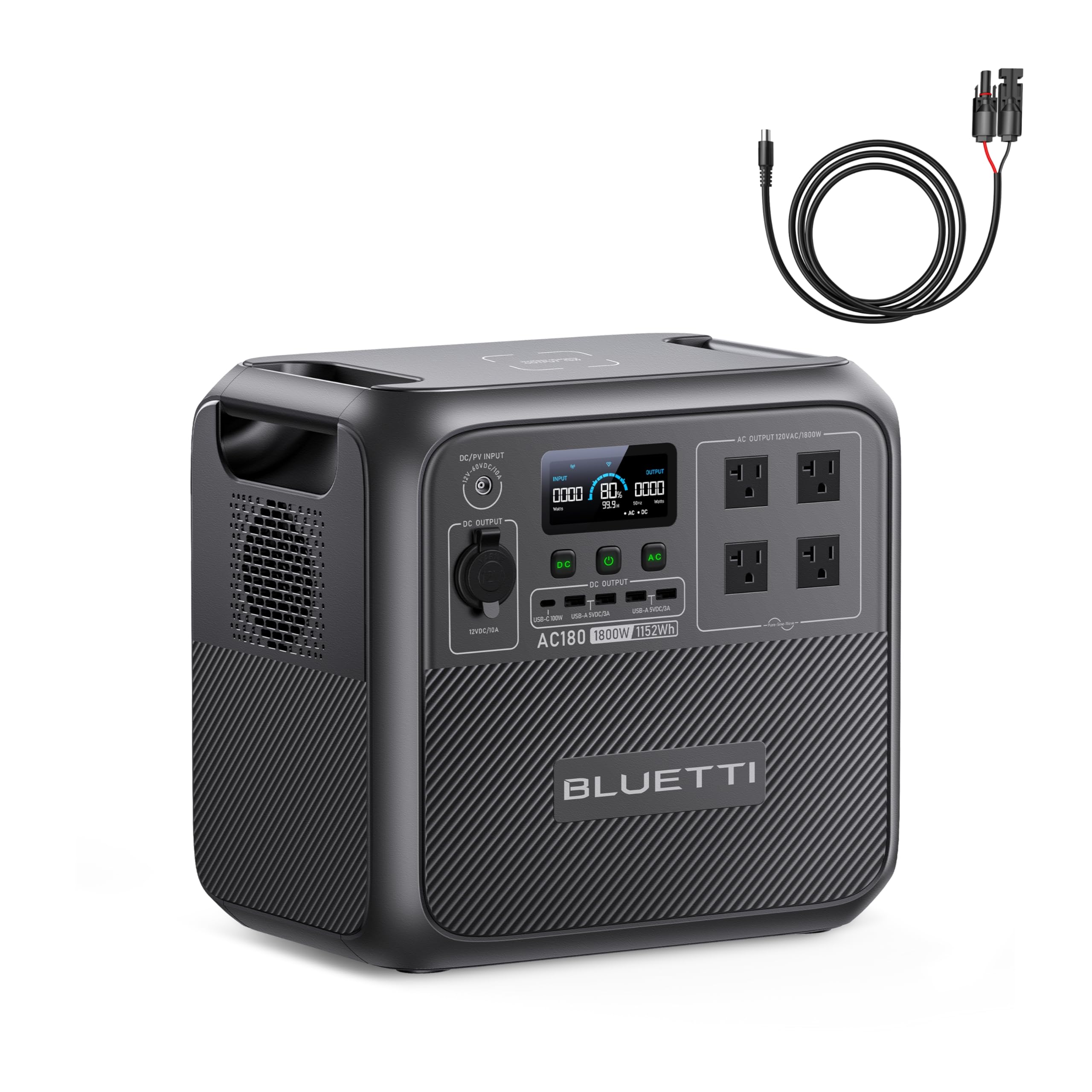
2,000+ ratings
Read Amazon ReviewsBLUETTI AC180
A strong fit for campers and households seeking a high-output portable battery with quick AC charging and solar input.
- 1,152Wh LiFePO₄ battery capacity for portable energy storage.
- 1,800W AC output, with an app-enabled boost to 2,700W.
- Eleven outlets overall, including four AC outlets.
- AC charging input up to 1,440W; a full charge is described as taking about one hour.

Pros
- High capacity and 1,800W output suit a broad mix of camping and backup needs.
- Fast AC input can reduce the time needed to replenish the battery between uses.
Consider before buying
- At 1,152Wh, it is a larger-capacity choice than many buyers need for phones, cameras or occasional small-device charging.
- The 2,700W boost is app-enabled, so check how it works with your intended appliance before depending on it.
Read the full review summary
The AC180 is built around a useful balance of stored energy and appliance-level output: 1,152Wh capacity, 1,800W output and an app-enabled boost to 2,700W.
Its four AC outlets and other connections are presented as 11 outlets overall, giving it room to support several devices at once.
For buyers who want one station for camping, off-grid use and selected home essentials, the combination is more versatile than a small power bank.
Charging flexibility is a central part of the design.
AC input is listed at up to 1,440W, with a full charge described as taking about an hour; solar input is up to 500W, with a stated full-charge window of 2.8–3.3 hours.
The AC180 also offers a 20ms UPS function for essentials during an outage.
These are useful capabilities, but actual runtime and solar charging depend on connected loads and conditions, so buyers should size the station around the equipment they need to keep running.
The buying factors
BLUETTI AC180 Scorecard
Editorial scores reflect listed features and buyer fit; they are not laboratory measurements or customer ratings.
Battery capacity
At 1,152Wh, it offers meaningful stored energy for a portable station, though runtime still depends on each device’s draw.
AC output
The 1,800W rating and app-enabled 2,700W boost broaden the range of loads it can serve; check appliance requirements before relying on the boost.
AC charging speed
Up to 1,440W input and a stated one-hour full charge make wall recharging a notable strength.
Solar charging
The built-in MPPT controller accepts up to 500W solar input, with a stated 2.8–3.3-hour full-charge window under suitable conditions.
Port flexibility
Eleven outlets overall and four AC outlets can accommodate multiple devices, though the exact connection mix should be checked for your setup.
Outage readiness
A 20ms UPS function supports use with essentials, but buyers should verify that timing and output suit their specific equipment.
Key Features and Specifications of BLUETTI AC180
- 1,152Wh LiFePO₄ battery capacity for portable energy storage.
- 1,800W AC output, with an app-enabled boost to 2,700W.
- Eleven outlets overall, including four AC outlets.
- AC charging input up to 1,440W; a full charge is described as taking about one hour.
- Built-in MPPT solar charging supports up to 500W input, with a stated full-charge time of 2.8–3.3 hours.
- A 20ms UPS function is intended to provide emergency power to essential devices.
- The package includes AC, car and solar charging cables, plus a user manual.
Pros and Cons of BLUETTI AC180
Pros
- High capacity and 1,800W output suit a broad mix of camping and backup needs.
- Fast AC input can reduce the time needed to replenish the battery between uses.
- Solar charging is built in, with support for up to 500W input.
- Four AC outlets and 11 outlets overall provide flexibility for several connected devices.
Consider before buying
- At 1,152Wh, it is a larger-capacity choice than many buyers need for phones, cameras or occasional small-device charging.
- The 2,700W boost is app-enabled, so check how it works with your intended appliance before depending on it.
- Solar recharge timing depends on conditions; the 2.8–3.3-hour figure assumes a suitable solar setup and input.
Who Should Buy BLUETTI AC180?
Good fit
Consider the AC180 if you want one station for campsite electronics, selected appliances and household essentials during an outage.
Its 1,152Wh battery gives you a substantial energy reserve, while 1,800W AC output and four AC outlets let you connect more than just low-power USB devices.
Before buying, list the wattage of the equipment you expect to run and decide how long it must stay on; capacity alone does not establish a guaranteed runtime.
It is also a sensible fit for buyers who value more than one way to recharge.
The fast AC input is useful when a wall outlet is available before a trip, while the 500W maximum solar input can help replenish the station away from home.
Check that your planned panel and charging arrangement are compatible with the included solar cable and the station’s input limit.
For home backup, the UPS function may help bridge an outage for essentials. Confirm that a 20ms switchover is appropriate for the particular device you want to keep powered, and prioritize only the loads that matter most.
That makes it easier to decide whether this portable format can cover your needs or whether your backup plan calls for a different setup.
Who should skip it
Skip the AC180 if your main goal is a compact source for occasional phone and camera charging. A 1,152Wh station with 1,800W AC output may be more capacity and output than that routine requires.
Look elsewhere if you need a guaranteed runtime for high-draw equipment or uninterrupted operation for a device with strict transfer-time requirements. Compare the device’s power needs with the station’s ratings and confirm the UPS timing suits it.
What the BLUETTI AC180’s design means for everyday use
Capacity and appliance planning
The 1,152Wh rating describes stored energy, while 1,800W describes the AC output level. Those figures answer different questions: the first informs how much energy is available, and the second helps determine which loads can run.
Add up the draw of the devices you plan to use and estimate the hours required before deciding whether the capacity is sufficient.
Fast charging between outings
A maximum 1,440W AC input and a stated one-hour full charge favor users who can recharge shortly before departure or between outages. The quick refill claim is a best-case description; charging time can vary with settings and conditions.
If turnaround time matters, plan around the rated input and the station’s charging instructions.
Solar input for off-grid use
The built-in MPPT controller and 500W solar-input ceiling let the AC180 accept a substantial solar contribution for a portable station. The 2.8–3.3-hour full-charge window gives a planning reference, but sun exposure and panel conditions affect the energy gathered.
Buyers should match their panel arrangement to the input limit and treat solar as a replenishment option, not a fixed schedule.
UPS use during an outage
The 20ms UPS function is aimed at essential equipment that needs a quick transition to battery power.
Since devices differ in how they respond to a transfer, check the equipment’s own requirements before making it part of a critical setup.
The station’s high output can support multiple loads, but each additional device draws from the same finite battery reserve.
Alternatives to BLUETTI AC180
Battery-focused alternative
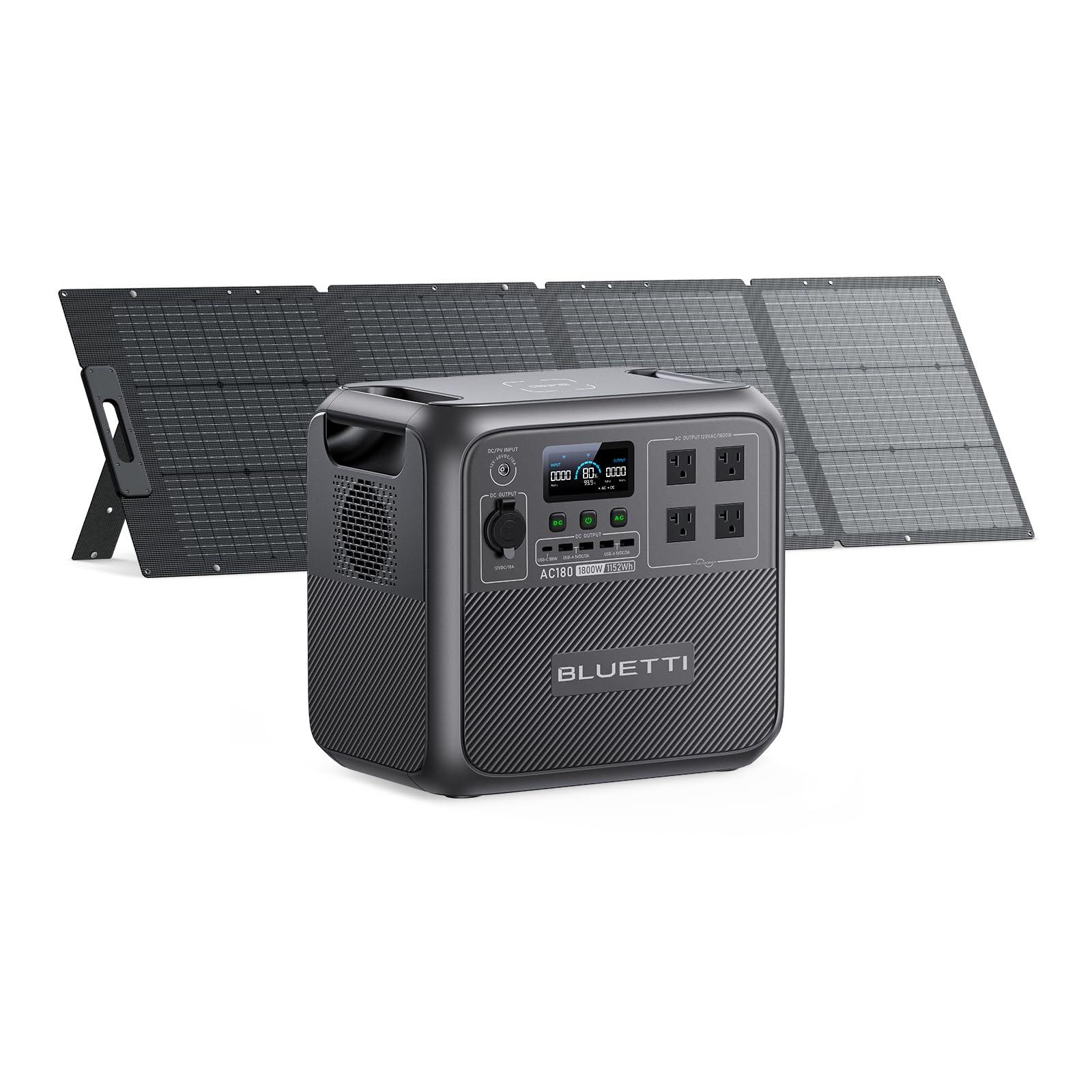
2,000+ ratings
Read Amazon ReviewsBLUETTI AC180 with 200W Solar Panel
Choose the main AC180 if you already have a compatible panel or want to select one separately.
Consider this package if a 200W panel is a useful starting point and you are comfortable accounting for separate shipment and the longer stated solar charging window.
- This AC180 package pairs the same 1,152Wh station and 1,800W output with a 200W solar panel; the panel is shipped separately, and the stated full solar recharge window is 4.8–9.6 hours.
- The AC180 reviewed here supports up to 500W of solar input, but the listed package includes charging cables rather than a solar panel.
Outdoor Generators alternative
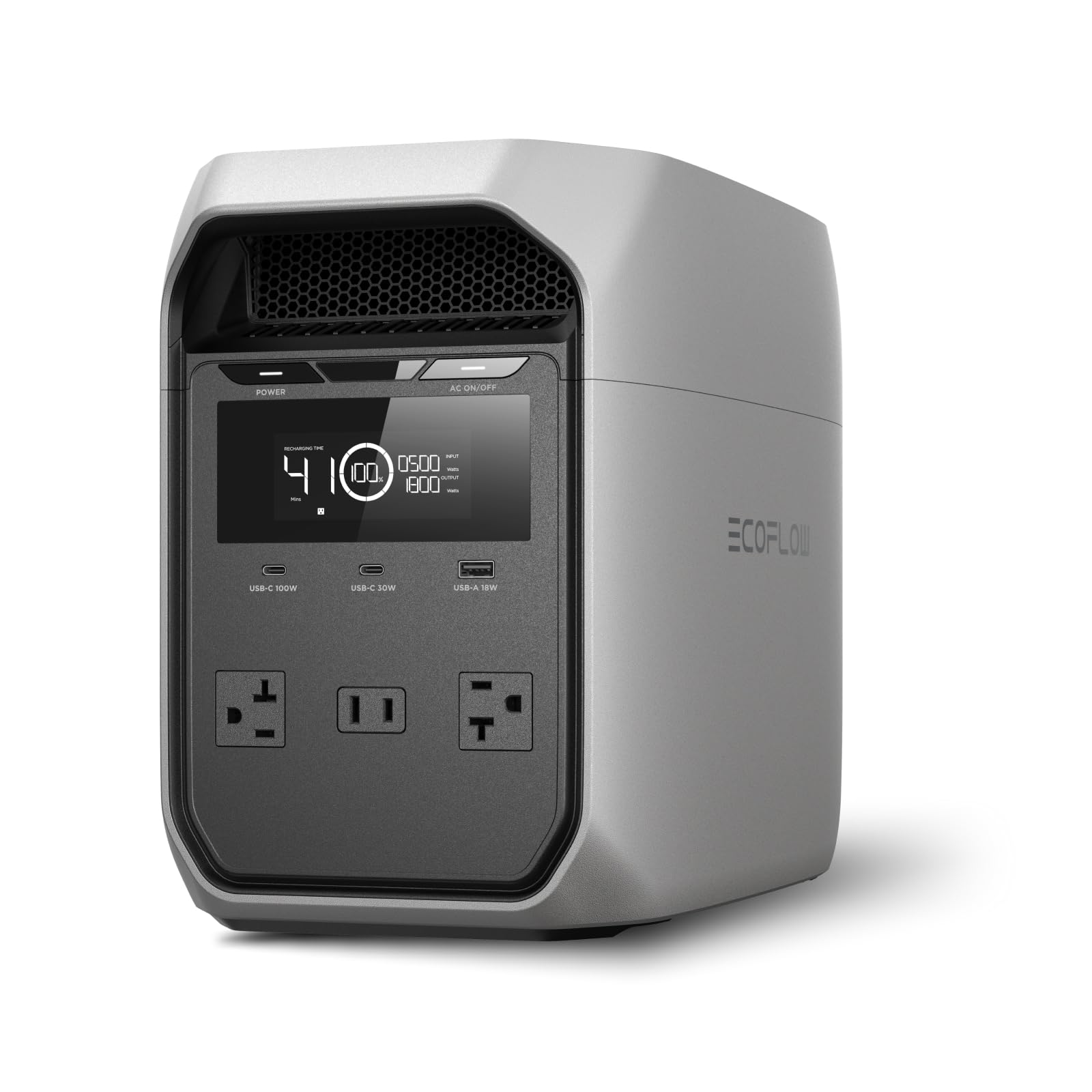
1,000+ ratings
Read Amazon ReviewsEcoFlow DELTA 3 Classic
The AC180 is a better fit if its larger stated capacity and included solar charging cable align with your setup.
Consider the DELTA 3 Classic if its listed UPS timing or app features matter more and you are comfortable sourcing a solar panel separately.
- The DELTA 3 Classic has 1,024Wh capacity, 1,800W output and 3600W surge.
- Its description lists under-10ms UPS switching, app controls and optional 500W solar charging with a stated 2.5-hour recharge.
- The AC180 offers 1,152Wh capacity, 1,800W output and up to 500W solar input, with a stated full solar charge in 2.8–3.3 hours.
Is BLUETTI AC180 Worth It?
The BLUETTI AC180 is worth considering if you want a high-output portable station with substantial capacity, fast AC recharging, solar input and an outage-focused UPS function.
Its mix of camping and home backup features makes the most sense for buyers who can use more than a small-device charger.
Before choosing it, check your appliances’ wattage, the runtime you need, and whether the 20ms UPS timing suits your essential equipment.
If those needs align with its ratings, the AC180 offers a flexible power option; if you only need occasional charging for small electronics, a less capable station may be a better-sized purchase.
Your review at a glance
2,000+ ratings
Read Amazon ReviewsBLUETTI AC180
A strong fit for campers and households seeking a high-output portable battery with quick AC charging and solar input.
- 1,152Wh LiFePO₄ battery capacity for portable energy storage.
- 1,800W AC output, with an app-enabled boost to 2,700W.
- Eleven outlets overall, including four AC outlets.
- AC charging input up to 1,440W; a full charge is described as taking about one hour.